The 3 AM editing session has long been a rite of passage for event photographers. But if you’re spending three hours at a desk for every hour you spend behind the lens, you aren’t just working hard, you’re hitting a ceiling.
For high-volume corporate and gala photographers, the post-event grind is a business bottleneck. In an era where clients demand social-ready content before the keynote ends, the old workflow of Shoot, Go Home, Cull, Edit, Upload has become a competitive disadvantage. You don’t need more time, you need a workflow that completes the job while you’re still on-site.
Auto-Optimize: The Quality Control "Safety Net"
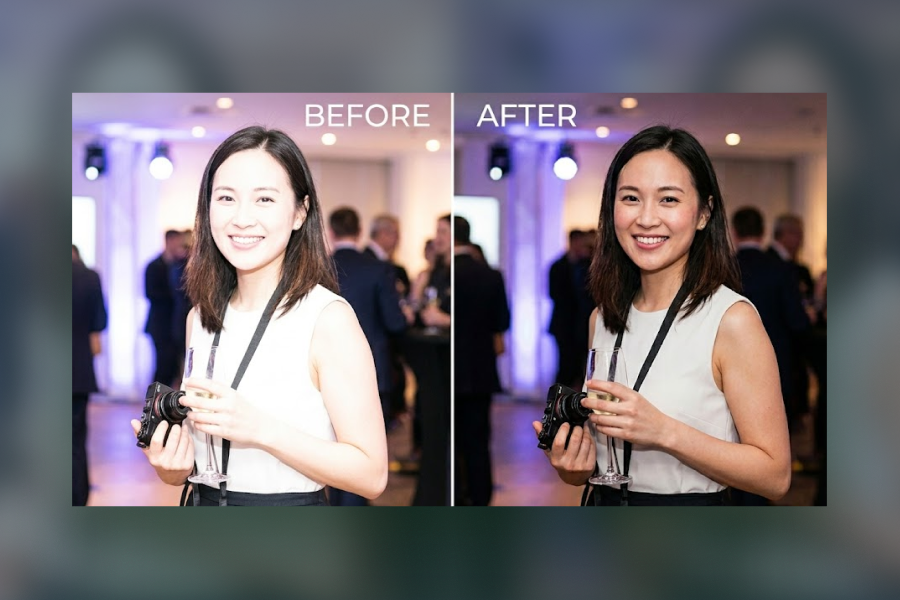
The biggest hesitation photographers have with real-time delivery is the fear of an imperfect exposure. We’ve all been there: a flash recycle delay or a sudden shift in ballroom lighting that results in a frame that isn’t quite client-ready.
Our Auto-Optimize feature was built specifically to solve this. It acts as an intelligent digital assistant, automatically applying light, professional edits to over- or under-exposed photos the moment they hit our platform. This ensures that every image shared in real time meets a professional baseline, giving you the confidence to enable instant delivery without worrying about technical misses. By handling the repetitive technical tweaks, Auto-Optimize removes the need for that exhausting first pass of editing once you get home.
The Power of a Consent-First Spotting Engine
While “AI” has become a catch-all term for speed, the real challenge for modern event pros is privacy. Many attendees and corporate clients are rightfully wary of how their data and images are handled.
SpotMyPhotos uses a proprietary spotting engine designed with a consent-first philosophy. Unlike open galleries or generic facial-recognition tools, our system requires guests to opt-in to receive their photos. Attendees register via a simple QR code before, during, or after an event (or can be registered by a photographer/assistant at an event), providing their consent to receive all the photos they’re in.
Once they’ve opted in, the spotting engine privately routes their specific photos directly to them. This approach does three things:
- Protects Data: It respects the growing global focus on image privacy and compliance standards.
- Eliminates Sorting: You no longer have to manually tag or sort photos into folders.
- Enhances Brand Trust: Your clients see you as a professional who takes their guests’ privacy as seriously as the photo quality.
Real-Time Client Deliverables
With the technical optimization and privacy-first routing handled, the final piece of the puzzle is the delivery itself.
- The Instant Photostream: Your client’s marketing or PR team can access a live photostream as you shoot. They get the high-res, professional shots they need for “live” social updates while the event is still trending.
- Instant Handoff: The moment your last upload is finished, a complete ZIP folder is ready. You can literally hand over the final deliverable to your client before you even leave the venue.
Reclaiming the Craft
The goal of intelligent automation isn’t to replace the photographer, it’s to replace the burnout. When you eliminate the admin weight of culling, exposure-tweaking, and manual distribution, you reclaim time to focus on what you actually love.
It’s time to retire the 3 AM editing session. By leveraging a consent-first spotting engine and auto-optimization, you can finally close your laptop when you leave the venue, knowing the work is already in your client’s hands.