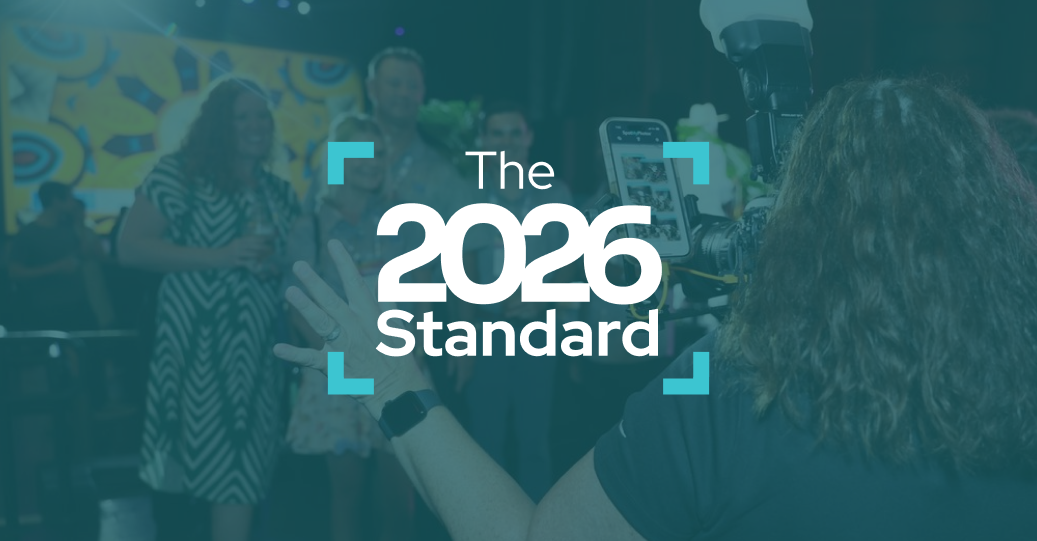
Being a pro today isn’t about what is in your bag. It is about the standard you bring to the room. Here are the five things that separate a true professional photographer from someone who just happens to own a camera.
1. Strategic Anticipation
A smartphone is reactive, but a professional is predictive. A pro is a student of human behavior and event flow. This means knowing the vibe is shifting and adjusting your position before the moment happens.
More importantly, it means knowing what to exclude. A guest with a phone might snap a great candid of a speaker, but a professional has the foresight to ensure they aren’t also capturing sensitive company data on a slide in the background.
A pro protects the client by seeing the whole frame, not just the subject.
2. Optical Mastery in Real-Time
Mobile devices have become experts at engineering a photo—essentially guessing what skin textures or lighting should look like. While this looks fine on a six-inch screen, it falls apart under the scrutiny of a brand’s needs.
Today, photos are shared instantly — the professional’s edge is getting it right in the glass. You aren’t relying on a software-generated mode or a long culling process to fix mistakes later. A pro understands the physics of light so well that the raw, real-time capture already possesses the depth and clarity that an algorithm can only hope to simulate.
3. The Relational Partner
This is the most underrated differentiator in the industry. A camera is a tool, but a professional photographer is a stakeholder in in the room — not just a vendor with a lens.
When a pro walks into an event, they aren’t a vendor lurking in the corner. They’re an extension of the host’s hospitality. They know the VIPs by name, navigate the room with grace, make every room look full, and troubleshoot on the fly. They care as much about the guest experience as they do about the shutter speed. They are a partner who ensures the event feels as good as it looks.
4. The Discretion of a Pro
Professionals operate with a respectfully confident standard. They bring a level of discretion that a hobbyist simply doesn’t consider. They understand how to handle sensitive moments and how to navigate what to share and what not to. This isn’t just about technical security; it is about the professional integrity required to capture an event with judgment.
5. The Narrative Thread
A smartphone captures a thousand disconnected moments. A professional builds a story. Even when delivering in real-time, a pro is thinking about the arc of the event.
By the end of the day, you don’t just have a mountain of digital noise; you have a cohesive narrative that reflects the values of the brand or the family involved. Professionals provide the finished story through intentional capture, ensuring that the legacy of the event is clear, consistent, and high-impact.
Gear gets you in the room. Skill sets you apart.
The smartphone era hasn’t made photographers obsolete; it simply moved the goalposts. In a world where everyone has access to the tools, the only thing left to compete on is your standard.
Mastery, partnership, and judgment aren’t features you can download. They are the reasons clients still hire a professional when everyone else in the room already has a camera.
SpotMyPhotos is proud to support the professional community by providing the standard of excellence in private photo delivery.